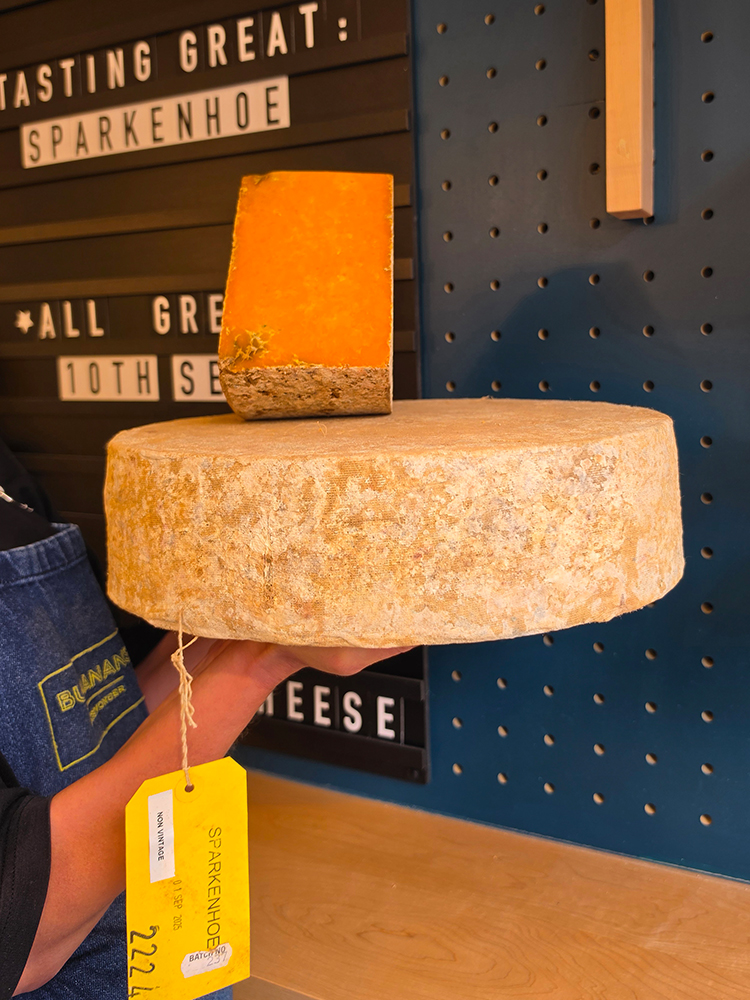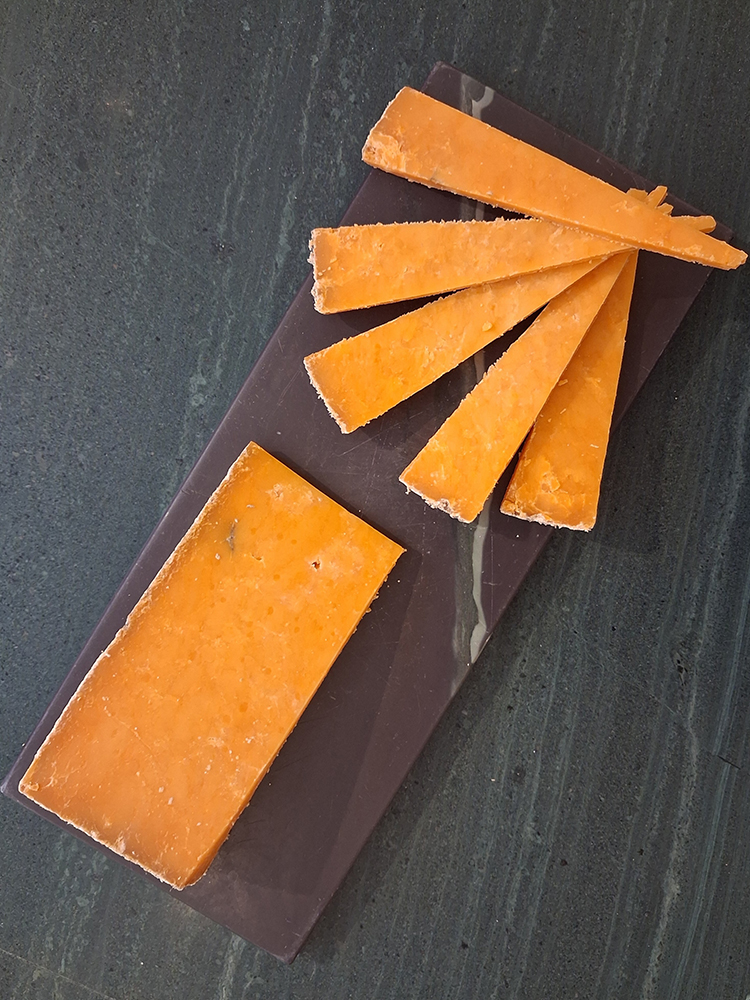
We recently took some of our restaurant customers to Leicestershire Handmade Cheese at Sparkenhoe Farm, in the hamlet of Upton, to see how one of England’s most misunderstood cheeses is made.
When you think of Red Leicester, you could be forgiven for picturing the mass-produced, vacuum-packed cube in a supermarket that gave it a reputation as a fairly uninteresting cheese. Traditional Red Leicester is something quite different and delicious.
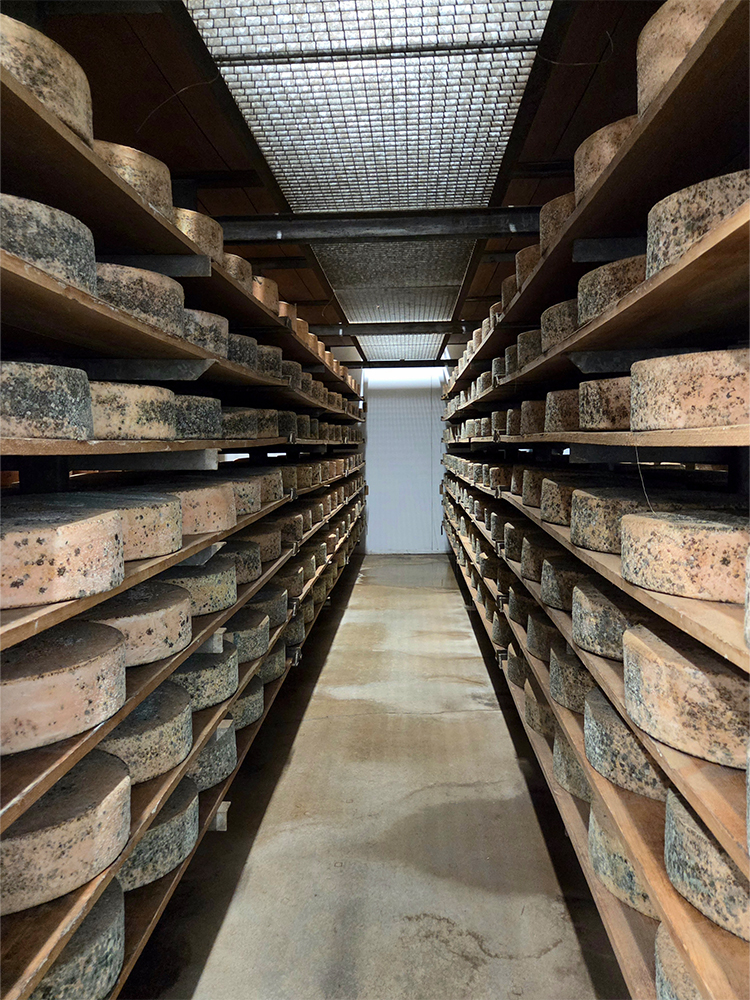
Leicestershire has been a dairy-farming county for centuries, with cheesemaking traditionally used to preserve surplus milk. Cheeses across England were made using local milk, with those made in the south leaning more towards Cheddar styles and cheeses made in the north more like crumbly Cheshires. Life (and cheese) was good.
Then came the Second World War. Speciality cheeses were largely replaced by standardised versions during this time, and even when restrictions lifted in the 1950s, most cheesemakers struggled to compete with mass production dairies. Traditional farmhouse Red Leicester had effectively disappeared.
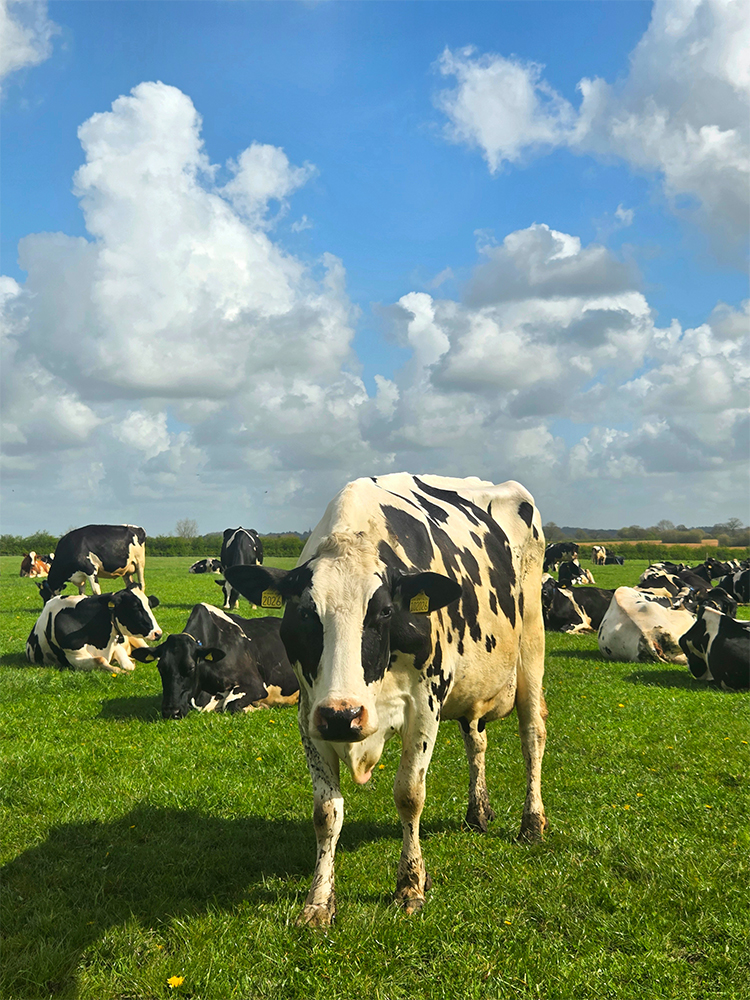
Enter David and Jo Clarke. While researching the history of their farm, they discovered that Red Leicester had been made there between 1745 and 1875. Determined to revive this heritage, they began producing their own in 2005, using traditional methods and raw milk from their herd of Holstein-Friesian cows. Today, the milk travels directly from the milking parlour into the cheese room. And this is where our visit began.
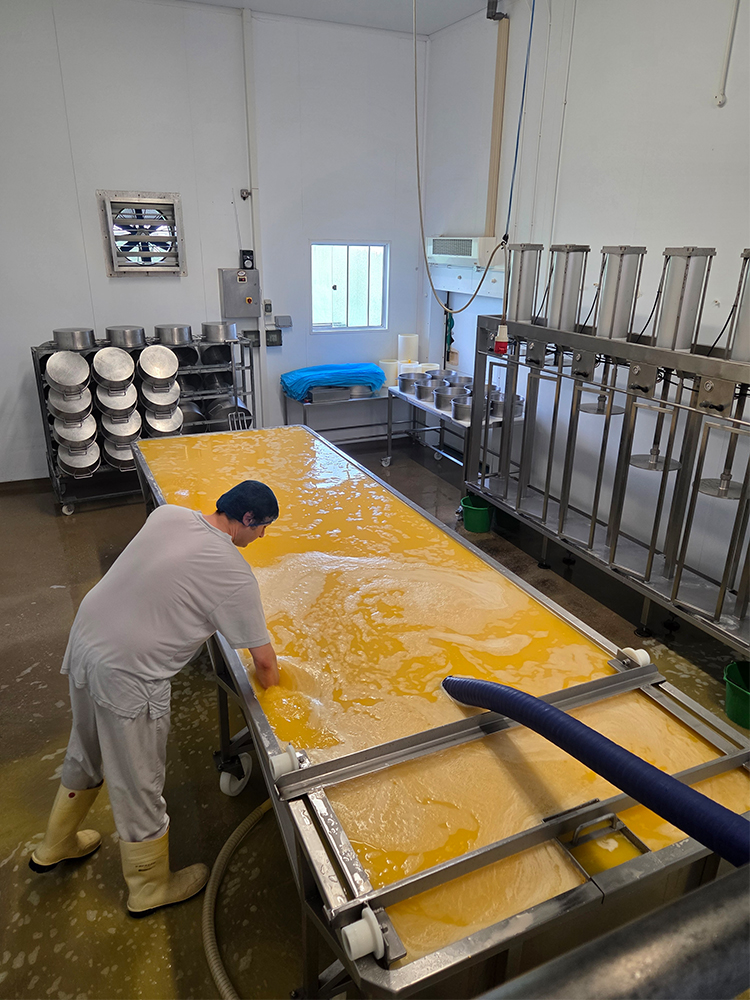
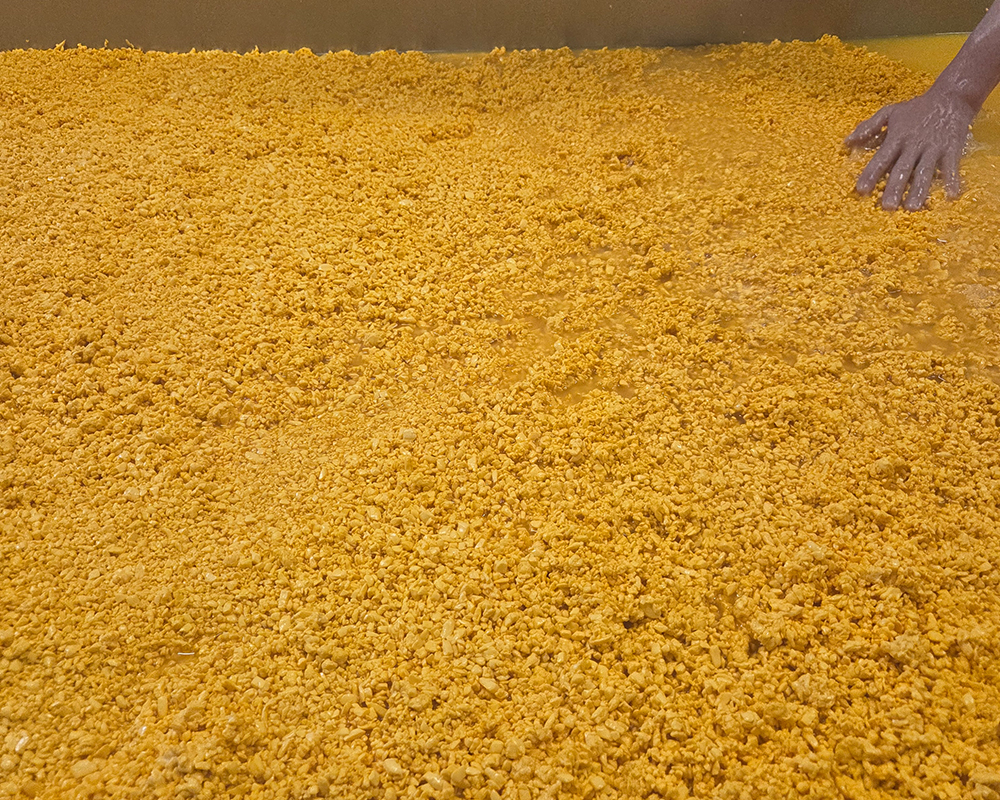
The make day starts at 5am, when raw milk is pumped directly into the cheese vats and rennet is added. We arrived just in time to see the annatto being poured in. Red Leicester gets its distinctive orange-red colour from annatto, a natural dye made from the seeds of the achiote tree, native to central America.
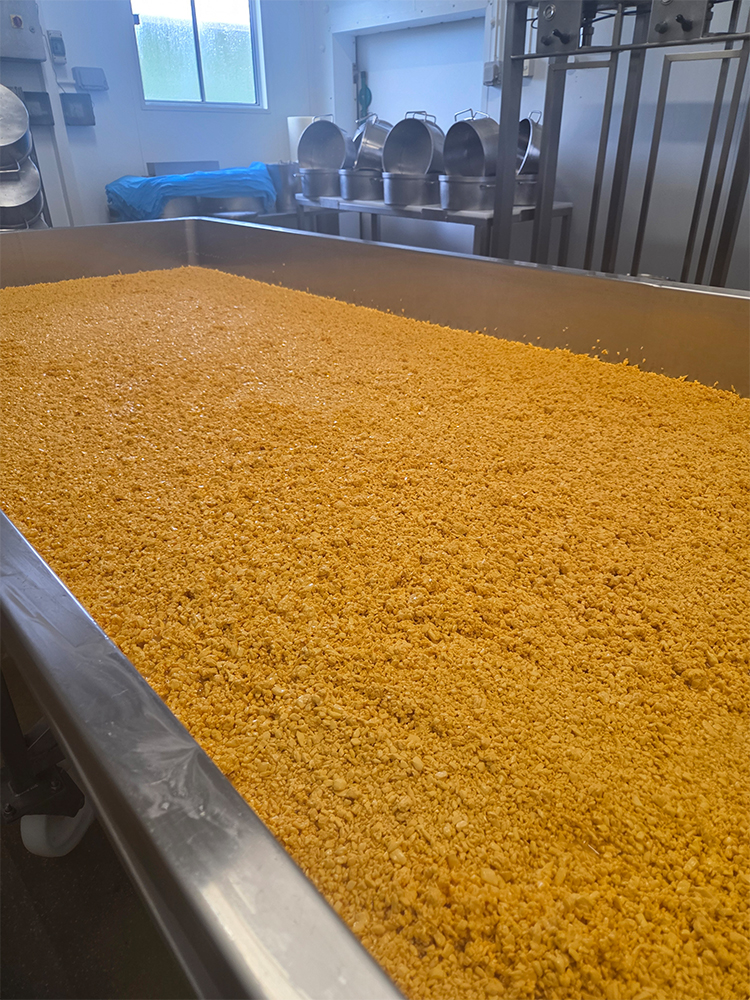
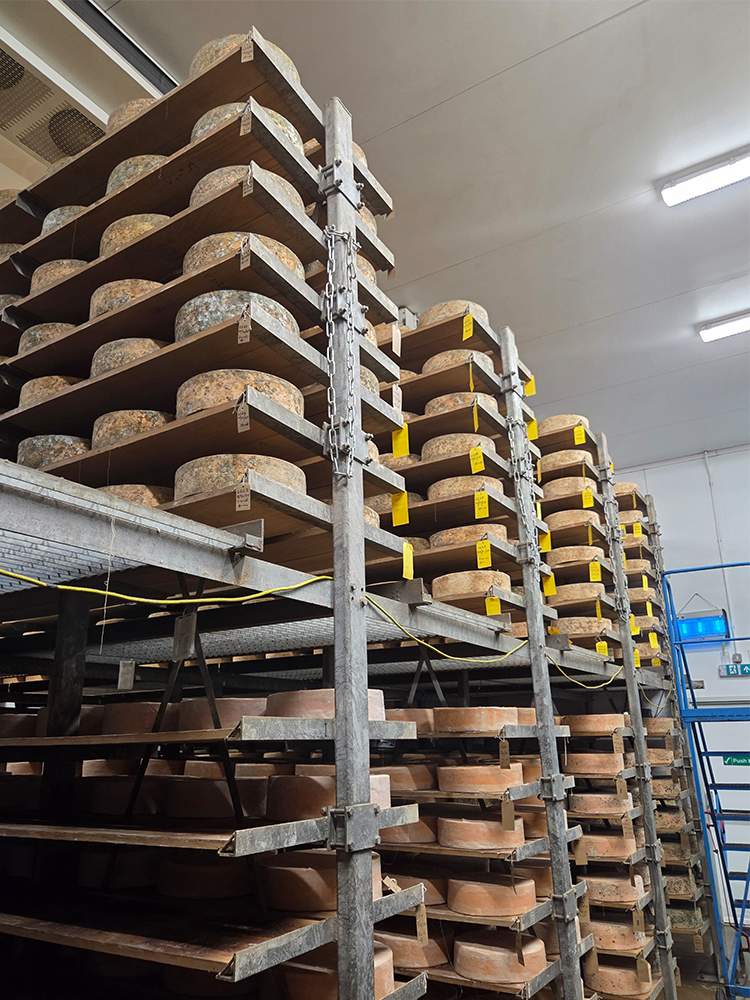
The curds are then scalded, separated from the whey, milled and salted before being pressed into moulds. After 24 hours, the wheels are bound in cloth and coated with lard before heading into the cheese store to mature at around 11°C for 6–8 months, or 12–14 months for the vintage cheese.
The traditional cloth-binding allows a natural rind to develop and the cheese to breathe as it matures, contributing to its flavour and complexity.
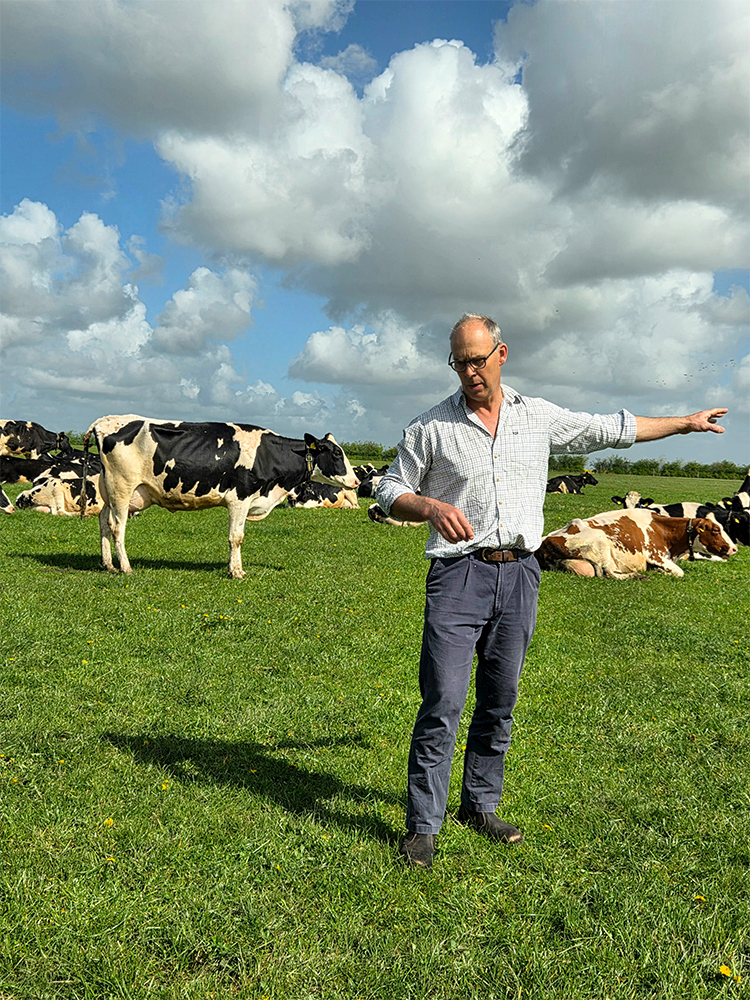
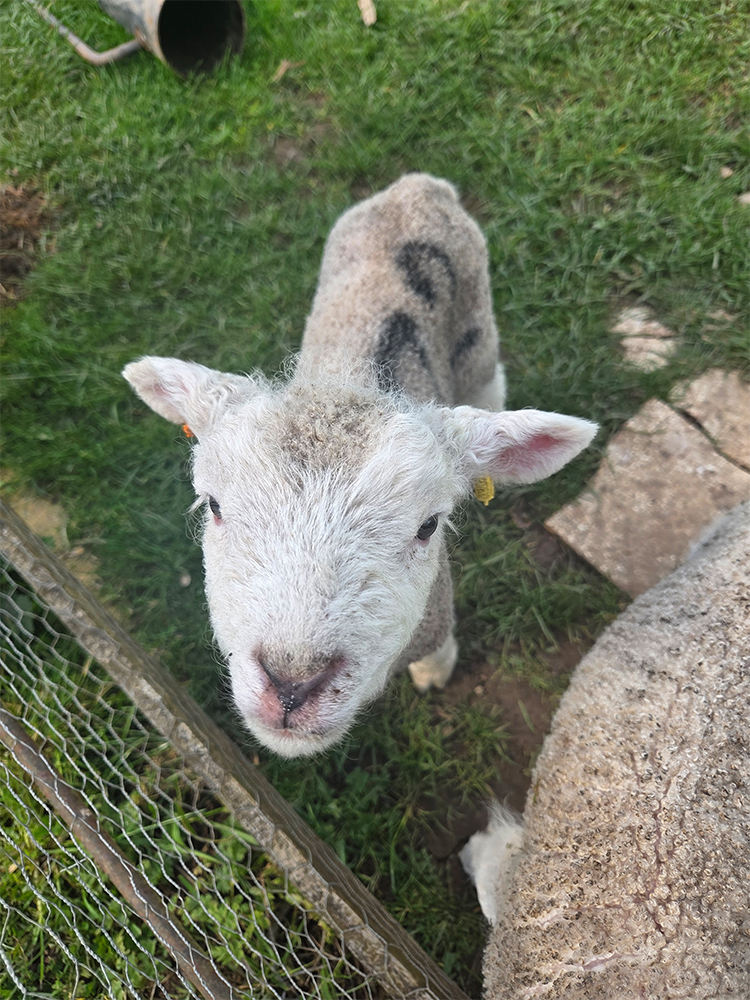
We also took a stroll around the farm, mostly led by David and his son Will, with help from Bridget the sausage dog. We met some of the gals (cows) and the lambs, who are an integral part of the farm’s regenerative farming approach.
The animals graze diverse, species-rich pastures and cover crops, while the arable land is managed without ploughing. By minimising soil disturbance, keeping living roots in the ground, and integrating livestock into the farming system, Sparkenhoe Farm aims to improve soil health, increase biodiversity and reduce reliance on artificial inputs.
It is a farming system designed not just to produce food, but to leave the land healthier for the future.
What does real Red Leicester taste like?
This depends on its age. Younger Sparkenhoe is creamy and mellow, while older wheels develop more pronounced nutty, savoury and citrusy flavours. The texture is slightly flaky and crumbly, with plenty of richness and depth.
Perhaps this is what makes Sparkenhoe so interesting. It isn’t simply a better version of a familiar cheese – it’s a glimpse into a cheesemaking tradition that very nearly disappeared.
We left with a much greater appreciation for Red Leicester and a rather strong feeling that this is a cheese that deserves to be taken much more seriously.